Jordan Jeffers
  • Home
    • Blog Archive
  • About
  • Publications
    • Books
    • Columns and Short Stories

Interviews with McSweeney's Columnists: KA Semenova

2/27/2014


As some of you know, I write an occasional column for McSweeney's Internet Tendency, "Speaking for all Christians Exactly Like Me." The column came about as a result of McSweeney's annual contest, which awards ten or so people with an opportunity to write for the site for a year. Today, I'm continuing an ongoing series of interviews with the other nine winners (or as many of them as I can track down and get to return my emails).

Today’s guest is KA Semenova, author of the McSweeney's column "Classic Russian Writers: For teh Internets." You'll probably figure this out on your own, but my questions and responses are in italics.


JJ: So, I want to start with asking you a little bit about your column and the theory that lurks behind it. You say in your bio that you want to test the “theory that human nature is neither analog or digital,” so you “update classics of Russian literature with modern technologies to see if the insights of those writers hold up today.” Can you expand on what you mean when you say you "update" a story for teh internets? Beyond the different technology, is there a sense in which you're trying to "update" the themes of the story too? Or is that one the points you're trying to make, that there are certain meanings that endure in spite of technological change?

KA: Yes, to your last sentence. I’m not trying to update the theme of the story at all. My entire point is that updating the technology does not change the meaning of the story, in any fundamental way. Why would it?

My sort of ongoing thesis—or my hobby horse, if you know me—is that human beings are more alike than they are different. I think that is true across cultures as well as across time. Which means, in this context, that human beings are human beings, whether they are using a teletype machine or texting. And that’s what this little experiment is all about.

If I can trace the origin of the McSweeney’s column to one thing, I’d say it’s this: I belong to some writers’ groups on Facebook, and once this guy, let’s call him Bob, asked for recommendations for novels that dealt with infidelity, to see how other writers had handled it. And I suggested that Bob read Anna Karenina, because Tolstoy had covered that particular ground, and had done it brilliantly.

And Bob said back to me, “Why would I read something that old? The world is so different now, how could I possibly find that useful?”

And I think that is just about the dumbest thing anyone has ever said. And I find it particularly distressing that it comes from someone who calls himself a writer. He epitomizes for me a kind of narcissism, a solipsism out there—that you see often on the Internet—that “our world” is fundamentally different than the world that came before.

I just don’t think that’s true, and my McSweeney’s project is about playing with that idea, doing case studies, as it were. What happens when you put a Chekhov character on Twitter? Is he still the same person? My revision of “Lady with a Dog” suggests that Gurov and @Gurov are exactly the same guy.

JJ: So, breaking in here, with this in mind, what do you think about science fiction? Because some science fiction writers would say that the advancing technology portrayed in their stories does alter their characters in fundamental ways. Actually, this is a pretty common definition of science fiction, a story in which the science is so important that it cannot be removed or changed without fundamentally altering the story. It's really hard to take something like Neuromancer, replace the technology, and still understand who Case is as a character. Though it's really easy with something like Star Wars, which is a fantasy story pretending to be science fiction.

I guess I'm wondering if we could reverse the process you do, like take a science fiction story, replace the technology with something more primitive, and see if the story still made sense. Maybe it depends on the technology; perhaps the Internet doesn't fundamentally change things in the way that, say, true artificial intelligence would.

KA: Interesting question. But I’m not sure I have a great response because I don’t read science fiction. It just doesn't interest me because, in my mind, I already know the answer to the question, and the answer is that the technology is largely irrelevant. Science fiction, however you slice it up, is about human relationships. Those books are genre—they’re quests, or romance novels, or war novels, or what-have-you—dressed up in a different world.

And I can sort of understand, theoretically, that it would be interesting to play with the laws of physics, etc., but personally, it doesn't draw me in. So I can’t respond here with any good examples because I haven’t read anything resembling sci-fi since I read God Bless You, Mr. Rosewater in like 8th grade.

But I will give you this to think about: Historically, UFOs anticipate the next development in technology. Meaning, if you go back to 18th century Europe, the UFO reports are big steel ships in the sky. In the 19th century, reports are about plane-shaped objects. In the last century, they became flying saucers. So it seems to be a fundamental part of human nature to see UFOs, but their descriptions change over time; so clearly there is a relationship to technology as it evolves. Humans apparently always anticipate (and fear) what technology will bring next.

And I think that might bring us to Jonathan Franzen, yes? I mentioned him in my McSweeney’s bio as one of the catalysts for my project.

About a month before I wrote the first column, Franzen published a screed about the Internet and technology and culture more generally. The article really amounted to a big fat nothing. He constructed a straw man (he clearly doesn't understand Internet culture at all), then utterly failed to destroy it anyway. And I think that’s too bad. There was a moment that I really liked Franzen, in the 90s, when I read The Corrections, and when he refused the Oprah’s book club imprimatur, which I thought was interesting. I sort of got him about that, and thought he had something useful to say there.

And ever since (I realized when I saw his last piece), I've been waiting for him to say something interesting, do something usefully provocative, but he’s not delivering. Somebody said, about this last piece, that he’d become an old man yelling at kids to get off his lawn. Exactly.

So I referred to him in my bio because, like him, there are certain things about the Internet that bug me. I have questions about the way technology might be changing us. But I’m more interested in nuanced discussion, in asking questions, which Franzen isn't doing. He’s rather offering up opinion in the form of verbs, like saying Rushdie “succumbed” to Twitter, as if it were a disease. That doesn't get us anywhere.

To me, Franzen is doing what Bob did, just in the opposite direction. Franzen likewise is positing fundamentally different pre- and post-Internet worlds, though in his case, he idealized the before, whereas Bob idealizes the now.

JJ: Do you think some familiarity with the original Russian stories (in translation or otherwise) you update is necessary to really appreciate what you're doing?

KA: Maybe. At least in the form they’re offered on McSweeney’s. John Warner and I have discussed this issue. In my original submission, the editing I did to the story was shown. The reader could see the red-lines and the replacements, so he or she could see very clearly that I only had to change a few words to bring Chekhov up to date in terms of technology and setting. But McSweeney’s had some technical problems displaying that, and John was also concerned that it interfered with the enjoyment of just reading the piece, which was also a concern of mine.

So we agreed to post them with all changes accepted, as it were. And that I would post the red-lined versions on my own website, so that anyone who is really interested can go look at the editing, to see what exactly I did.

But to respond to what I think is a kind of implicit question in your question—eg, does anybody besides you get what the hell you’re doing?—I don’t know. I know John does, obviously. Because we’ve talked about it. I do hear where I think you’re coming from, though, that there is inherently a somewhat limited audience for these pieces. But that’s really okay with me, because that is the great thing about the Internet, that you can find limited audiences, fellow Russian literature geeks like yourself. And there are a lot more of them out there than you’d think.

In any case, this is what I've always liked about McSweeney’s, that it is often like hanging out with a bunch of grad students, at a bar, after class. It can be a kind of para-academic, funny place. And I think—and I hope I don’t offend anyone, but—for much of McSweeney’s stuff, it’s not really about reading every word of every column. It’s about seeing the title, and reading a piece, and getting what the writer is doing, and considering that idea. And usually laughing. Part of the fun is whether you get the joke of it at all.

I’m totally a person who believes in tribes, and I know mine. So when John said to me, when I submitted a piece, “Amazing. I’d never heard of Karamzin. This is fascinating,” I knew that a tribe member had gotten what I was doing. And I felt like I’d just won the Internet, so it’s all good to me.

JJ: Grad students at a bar—that sounds about right. I remember when the column contest was in its judging phase, John tweeted something about how around 25% of the entries had PhDs and about 50% had advanced degrees of one kind or another.
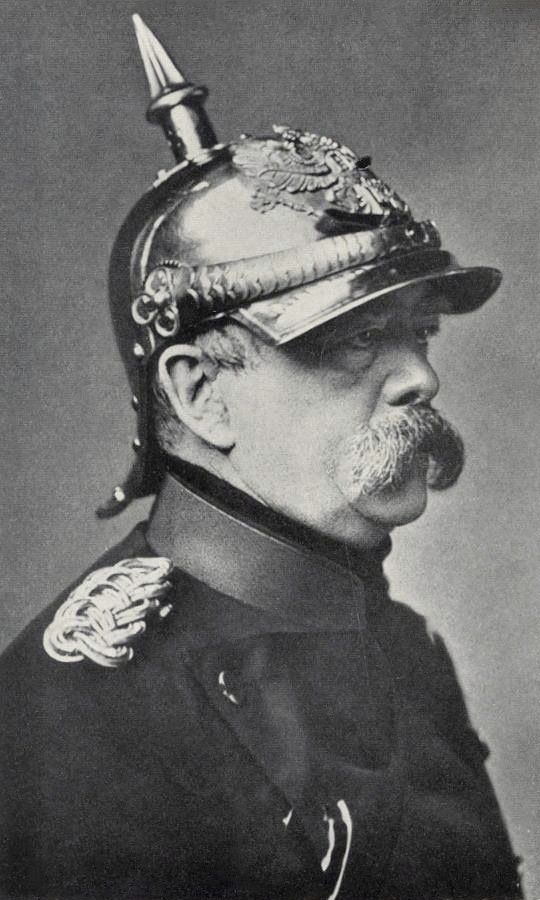
KA: That sounded exactly right to me too. I was in a history PhD program at Georgetown (left early), and one night a group of us sat around after class at the Tombs, a bar, constructing the funny hat theory of history. We almost killed ourselves laughing as we developed an outline. Even assigned chapters to each other. I was supposed to write on the pickelhaube. (picture right) Which of course I never did. Maybe I should reanimate the theory, and submit it to McSweeney’s next year.

Anyway, it’s kind of enough for me if someone notices that I put Gurov on Twitter, and then they think about that notion for a second, making of it what they will. My goal really is to raise questions, not answer them. Because, to return to Franzen, deciding the Internet is “bad,” just gets you nowhere: it gives you no answers, it gives you no questions. And to decide, like Bob, that writers before 2000 have nothing interesting to say is even worse. Both are intellectual dead ends.

JJ: How'd you get started writing? For a general audience, that is.

KA: I’m not sure I have yet, exactly. I’ve worked around publishing for about thirty years now, which is working with writing, but behind the scenes. Most of my writing for a long time was academic (I have an MA in Russian history) or things I did for myself, like journaling. I only started writing seriously, aiming for publication, about five years ago. (I have two novels in progress and two memoir-type things, too. I like to skip around!) And I didn’t really expect McSweeney’s to take my column, which meant I wasn’t quite prepared to go public yet. (Which is why I had to delay publishing this Q&A, because my web site wasn’t ready yet!) I always thought I’d go “public” later, with one of the long-form pieces.

JJ: Can you give us a little teaser on what these books are about?

The memoirs are about my Russian family, who lived the 20th century the way most Russians did—war, famine, emigration, etc. I’ve been engaged on a genealogical/historical research project involving them for twenty-some years now, so those books are about that. What I’m working on right now, though, is crime fiction, set in northern Ohio. Sophie, a PhD candidate in history who has been away for a decade, comes home to hole up in her grandmother’s cottage on Lake Erie to write her dissertation. When a priest at a nearby Russian Orthodox Church is murdered, Marty, her old high school boyfriend, who is now a sheriff’s deputy, asks for her help. Then another priest is murdered…

JJ: Is that the kind of thing you like to read too? What do you think is the best thing you’ve read recently?

KA: Hmmm. Without a doubt, Donna Tartt’s The Goldfinch. I spent the week between Christmas and New Year’s Eve with it—it’s an 800 page novel—and had the most fun I’ve had in years with a book. Couldn’t put it down. And just before that, I read Death of a Nightingale, Lene Kaaberbol & Agnete Friis’s third novel. More generally, for the last few years, that’s the kind of thing I’ve been reading: Scandinavian fiction, mostly the crime fiction, though not exclusively. (And this started for me long before Dragon Tattoo went big. I’d read all of Henning Mankell by the time Larsson broke out.)

There is something deeply interesting about what is going on with crime fiction in northern Europe, not only in the Scandinavian countries, but also people like Tana French in the UK. Right now, I’m reading a book by a Swede, Johann Theorin. I had to order two of his books from the UK—they’re not available in the States yet—because I just love his sense of place.

JJ: So you are a Scandinavian crime fiction hipster?

KA: Yes! I’m not ashamed to say it! I have a whole big theory about it, to tell you the truth. I think the Scandinavians are up to something very interesting. They are perhaps alone in genuinely taking on the way neoliberalism (and the fall of the Berlin Wall) has shaped our world over the last couple of decades. They are the people who are really grappling with this, in fiction, in my opinion.

Many people like to say that the crime novel originated in the UK (with Sherlock Holmes) but I think that’s just wrong. (Of course, it’s usually Brits who say this.) Some people point to Poe, in the States, working a few decades earlier, but again, I just don’t buy that. Poe wasn’t quite doing crime fiction, and I don’t think American crime fiction has ever been especially interesting, then or now, in terms of its ambitions. It tends to be genre, and while many of the Scandinavians are doing genre stuff, a lot of them are much more ambitious.

I think that crime fiction, of a certain kind, anyway, originated with Dostoevsky, and that some of the Scandinavians are up to the same thing he was doing, which is using crime fiction to comment on social reality. I’m so interested in this, in fact, that I want to do a blog on it. I’ve registered a domain, and I’ve got some posts ready, but OMG, so not enough time in the day…

JJ: That’s a type of fiction that I don’t think I will ever really appreciate, mostly because I can’t handle the creepiness of it, especially the books about serial killers. I’m much less afraid of supernatural monsters: demons, witches, vampires, whatever, which I think is mostly because I assume that those creatures all have rules that govern their behavior. Serial killers are a complete mystery to me; their motivations and actions make no sense. It’s similar in some ways to how I’m afraid of bees and wasps but not snakes or rats or birds. I know what a bird is going to do, but I can’t ever figure out what a bee is going to do.

KA: Wow. We’re so different. I don’t like reading something when I know what’s going to happen, for exactly the reasons you cite. If it’s a zombie, I know he’s going to walk around stiff-legged and try to eat brains. If it’s genre mystery, then the detective is going to get the bad guy in the end. Where’s the fun in that?

I like books in which the end cannot be predicted; or if it can be (like the Wallander books; which are conventional police procedurals in that sense), then there must be something else at stake. In that instance, it’s Wallander’s health and relationships; but also more broadly, the health and relationships of Sweden, as he’s taking on political changes in the world and how that’s affecting the country.

JJ: So if zombies or vampires or demons don't scare you, what does scare you? Anything?

KA: Bad dreams. I had one recently. I woke up at 4:25 am, with my heart pounding, and I didn’t know where I was. I looked around my room, and it took me a long time—like a minute, no joke—to be sure I was home, in my bedroom. Because I’m not usually up at that time, of course, so the light was kind of odd and things looked different, somehow.

And in my dream, someone who I have seen exactly once since 1983 had just gotten hit by a bunch of falling metal boxes. (I have no idea where they came from.) He was leading me out a door, then the boxes fell, then he was lying on the ground, with a bloody face, and I was frozen, trying to call 911. Which is the moment I woke up.

I don’t have bad dreams like this very often, like maybe once every five years or so. But when I do, they’re really awful. I don’t tend to be prophetic on this score, thank God. I have no idea what triggers them. Wish I knew. I’d stop doing whatever it is.

JJ: I have attempted to hurt my wife three times in my sleep, twice I tried to choke her, once I punched her really hard. All three times I was having a dream where I was protecting her from some kind of attacker. So I have this fear of doing really serious harm to her in my sleep, which is sort of related to a larger, general fear of hurting the people I love, which probably has something to do with my fear of my own brain, and how weird it can get sometimes in there.

KA: Wow. That’s horrible. I’m so sorry. I get how freaky that would be. Though you’ve oddly made me feel better, I must say. At least I don’t have to worry about hitting someone.

JJ: Glad I could help. Let's end on a hypothetical. Suppose that somebody you loved was going to enter the McSweeney's column contest next year. What advice would you give them?

KA: I would say to them, “If you do it, what’s the worst that can happen?” And if the only answer they can come up with is “They’ll say ‘no,” then I’d say, “As worsts go, that’s not much.”

Because that’s how I got myself to do it. In fact, I adopted “What’s the worst that can happen?” as my mantra, the question to ask myself when I’m unsure about whether I should do something, take a chance. Over the last year or so, it’s got me a McSweeney’s column, a distressed turquoise chalk-painted bookshelf, and a new kitten. And I’ll be teaching a workshop in Puerto Rico in August. So I’d have to say this mantra is really working for me, so far.


You can read all of "Classic Russian Writers: For teh Internets" at McSweeney's Internet Tendency. I'd suggest Vsevolod M. Garshin's "The Signal." That one is a killer.
Read more blog posts

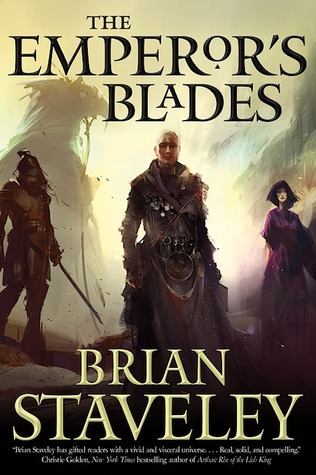
Short-short book review: The Emperor's Blades by Brian Staveley

2/14/2014


Book review in one tweet

Poisonous cave lizards, giant birds, and spiders that will eat your brain. Also, monks. The monks are the most dangerous.

Favorite quote

For a while he watched a thin white cloud, light as air and impossibly far away. When it scudded beyond the range of his vision, he looked instead into the wide gray blank of the sky. The empty sky, he thought idly to himself. A heaven of nothingness. Without that space, the clouds could not sail past. Without it, the stars could not turn in their orbits. Without that great emptiness, the trees would wither, the light dim… Kaden stared into the sky until he felt he might fall upward, plummeting away from the earth into the bottomless gray, dwindling to a thin a point, then to nothing.

Review

Epic fantasy, more than any other genre, is often built on conflict between extremes: light and dark, order and chaos, Cardinals and Cubs, etc. Authors create characters to embody these principles in their actions and attitudes, and set them against each other in order to say something about our values and choices, the light and dark within ourselves. And, very often, these characters are given powers (magic, martial, or whatever) that reflect in some way how well they embody a particular value. So the most powerful evil character is also usually the most evil in general. The most powerful good character is usually the most good in general. Think Gandalf and Sauron, and you'll get the idea.

Now this sort of story principle is one of the things that makes epic fantasy unique, and it's also the sort of thing that authors will play with in different ways. The Emperor's Blades contains this same classic sort of conflict, but instead of the typical sorts of moral conflicts, Staveley gives us a conflict between... Well I'm not sure what to call it. Emotion and aloofness, I suppose. Feeling and void. He makes up his own word for the void: vaniate, a sort of detached, passionlees state that banishes all fear and love, all anger and worry, all sadness and joy. Kaden, the heir to the throne, is in pursuit of this blank ideal for much of the book, while his brother Valyn embodies the opposite end of the spectrum, often emotional to a fault, both in love and hate, anger and kindness. Each learns to harness the power of these respective extremes, making themselves into quite powerful, if quite different creatures. And it's the combination of their two approaches that dominates the climax, with each needing the other in order to survive.

Yet ultimately, neither of these approaches is really embraced by the end of the book. Both, actually, are shown to be rather horrible in their own way. And this is where the third sibling, their sister Adare, will likely become important in books to come, as a character in which to reconcile these competing principles. Really, my only small criticism of the book was with the handling of her character, since there were a few long sections when Adare seemed to disappear. Her face-off with the religious establishment of the capital city seemed far less important than the brothers' respective conflicts, and was accomplished in much less actual page time. But I have a weird feeling that she's actually the most important character in the series.

Staveley has written extensively about the writing of epic fantasy; his blog, not coincidentally, is called On the Writing of Epic Fantasy. It was actually in these fairly detailed essays that I first encountered Staveley, and had a few discussions with him on Google+. (Yes, I know that is surprising, but people actually do use Google+) You can see the fruit of all that thinking in The Emperor's Blades. Staveley knows all the notes, knows when to improvise, and when to just let the music flow. I look forward to his next one.

Nerd rating

8 wizard staffs (out of 10)

A few small complaints aside, this is an excellent start. And with the second book of the series already finished and ready to come out in 2015, there won't be a lot of time to wait for the next chapter. Get it from your library. And make sure you start it during a week where you don't have a lot to do. There will probably be a couple late nights.

Non-nerd rating

5 cold, frosty beers (out of 10)

Not a bad novel for beginning readers of epic fantasy. The character list is fairly short, so you won't get overwhelmed with a few hundred names of royal family members and their third cousin's illegitimate children (I'm looking at you Double-R Martin). The book is still very solidly in the fantasy genre, however, with plenty of weird names, weird maps, and sword fights. If you're a fan of black ops or spy movies, you'll probably enjoy it.


These reviews and more can be found (and are posted first) on my Goodreads page, for those of you who are a part of that particular electronic social club. All of them will make their way to this blog eventually.

Read more blog posts

Speaking for All Christians Exactly Like Me: Christian Rock Radio and a Basketful of Baby Unicorns

2/4/2014


My newest McSweeney's column, "Christian Rock Radio and a Basketful of Baby Unicorns," is out today. A little preview is below:

There are three kinds of CAC songs:

Song 1 – Christ is awesome and powerful. Praise Him! These songs usually rhyme “grace” with “face.”

Song 2 – Same as Song 1, except the song is directed to “the Lord,” instead of Christ. Also, one of the four choruses is sung by a choir of children. These songs usually rhyme “grace” with “face.”

Song 3 – My daily life is hectic and sort of miserable, and I often fall short of my religious ideals. These songs usually rhyme “grace” with “face.”

You can read the whole thing on the McSweeney's website.


Though I generally disable comments on this website (due to spamming and the ever present Internet cloud of hate), I do like to hear from people who read the column, so feel free to drop me a line using one of the electronic relationship buttons on the right.

Read more blog posts

Short-short Book Review: Going Postal by Terry Pratchett

1/31/2014


Book review in one tweet

Everyone is a con artist, unless you are a giant stone golem. Then you are an emotionless work machine. #ManyPunsIncluded

Favorite quote

Just below the dome, staring down from their niches, were statues of the Virtues: Patience, Chastity, Silence, Charity, Hope, Tubso, Bissonomy, and Fortitude. (Many cultures practice neither of these in the hustle and bustle of the modern world, because no one can remember what they are.)

Review

I've spent the better part of a year submitting stories to short-fiction magazines, most of them of the sci-fi-fantasy variety. Every single one of these magazines has a fairly specific set of guidelines for the formatting of submissions and the kinds of stories they are looking for. Here's a typical example (adapted from Clarkesworld Magazine, probably the best free fiction site online, except maybe Tor.com, magazines which have rejected me... I mean… have rejected my stories a total of seven times between them.)

Though no particular setting, theme, or plot is anathema to us, the following are likely hard sells:
  • stories in which a milquetoast civilian government is depicted as the sole obstacle to either catching some depraved criminal or to an uncomplicated military victory
  • stories in which the words "thou" or "thine" appear
  • sexy vampires, wanton werewolves, or lusty pirates
  • "funny" stories that depend on, or even include, puns

I am pretty confident that Terry Pratchett is the reason for that last one, just like I'm pretty confident that the editor of this list used the word "milquetoast" to confuse people. (It means timid). Pratchett is an insanely successful author, and his books are really fun and easy reads, and yes, full of puns. I suspect that legions of Pratchett fans have been flooding the editorial inboxes of magazine editors everywhere since he hit the height of his popularity in the early-to-mid 90s.

But writing humor is hard work, especially in the fantasy realm. This is mostly because fantasy is already so ridiculous that it has to take itself incredibly seriously to get the reader to buy in. So a fantasy story that doesn't take itself seriously will often smash itself to pieces pretty quickly.

So I was a little nervous picking up Going Postal, this being my first introduction to Pratchett and his Discworld series. But from the very first couple Prologs (there's two), I felt confident that I was in good hands. Pratchett has a gift for writing humor that makes you laugh and advances the storyline at the same time, like Shakespeare, only not as long-winded or as good. He has a real gift for crafting horrible character names, Moist von Lipwig being the worst, and the name of the main character. This is a good rule of thumb for all humor writing, I think: any time you can give one of your characters an adjective for a name, you should do it.

The story follows Moist as he goes from a convicted con man to the head of the Ankh-Morpork city post office. I won't give away any more of the plot, except to say that there's a pretty funny scene between a nineteen-thousand-year-old golem and Death.

Thematically, Pratchett spreads the humor around, taking shots at the usual comedic targets: religion, government, big business, and even academia, although the academics he makes fun of are mostly wizards. This is fair, I suppose, although it also leaves me a little underwhelmed at the end. I know this is pre-modern, but I like stories that have a point beyond "Everybody is a fool." I could probably find a point like that in Going Postal if I really tried hard, but I don't think I should have to try hard. I'm out of school.

Nerd rating

7 wizard staffs (out of 10)

If you want a new series to get into, Pratchett currently has 40 Discworld books out, most of which can be read independently of each other. I liked this one enough that I'll probably check out a few more, and that's about the best recommendation you can give for a series.

Non-nerd rating

9 cold, frosty beers (out of 10)

This is just about the easiest fantasy you'll ever read, with the exception of Harry Potter. It's ideal for airplanes, beaches, bus stations, and other places that normal people read books. Give it a shot, unless you are like my wife, and you have an intense hatred for the word "moist."


These reviews and more can be found on my Goodreads page, for those of you who are a part of that particular electronic social club.

More blog posts

Interviews with McSweeney's Columnists: Ali Fitzgerald

1/20/2014


As some of you know, I write an occasional column for McSweeney's Internet Tendency, "Speaking for all Christians Exactly Like Me." The column came about as a result of McSweeney's annual contest, which awards ten or so people with an opportunity to write for the site for a year. Today, I'm continuing an ongoing series of interviews with the other nine winners (or as many of them as I can track down and get to return my emails).

Today’s guest is Ali Fitzgerald, author of the McSweeney's column/webcomic "Hungover Bear and Friends." You'll probably figure this out on your own, but my questions and responses are in italics.


JJ: Let's start with the most important question: Why is Hungover Bear always hungover? And what does he like to drink?

AF: Well, I don’t necessarily think he’s always hungover. I think he could just as easily be named “Melancholy Bear.” But his drinking definitely contributes to his malaise, and a hungover bear is way funnier. I want to explore the funny/strange side of drinking related depression with him. I imagine him as a kind of introspective, infinitely lovable Lost in Translation character.

I’ve thought about what he would drink quite a bit. And I think it would be Chianti, whiskey, and good IPAs. Coincidentally, that is what I drink.

JJ: So do you identify with Hungover Bear over the others, or do you think there are elements of your personality in all of the characters?

I’ve thought about that question a lot too. I kind of based Hungover Bear on myself, or more accurately, a personification (bearification?) of the way I feel sometimes. The others are mixtures of specific people/behaviors I’ve encountered along the way.

But sometimes I’ll do something and think to myself, “Oh man, maybe I am Self-Righteous Hawk.” But I console myself with the fact that I think we’re all Self-Righteous Hawk sometimes.

JJ: Do you think of your column primarily as humor or as social commentary? It's definitely got elements of both, and the best humor always has some sort of commentary within it. I'm mostly wondering how you see it, or what you intend for it.

AF: That’s a good question. Both? It’s interesting how much you can get away with using animals as proxies. Since I started the column, I feel like I should reread Animal Farm for that kind of allegorical humor. Actually, Patricia Highsmith has a bunch of great short stories from the animal’s point of view. There’s one about a one-eyed rat in Venice, where the rat isn’t anthropomorphized at all, but we still get a sense of its psychology. I’m really excited to plumb the social commentary depths with these characters, because I feel like it’s rich terrain.

Generally speaking though, it’s important that the comic be funny. It really pleases me to think that people will become attached to the characters and chuckle along with them.

JJ: Who do you think of as your audience?

AF: You know, I’m not sure. In my early twenties I tried to get a comic nationally syndicated and the response was that it was “too dark.” I was surprised because the comic was called Patent Sweater, and it was culled from my sweetest, sincerest self. After that I went to grad school and embraced more abstract, perhaps less mainstream leanings, which is to say that people who like my comics are probably not the same as Family Circus readers. But you never know - I actually had a conversation a few days ago about how subversive the structure of Family Circus really was. Surprisingly experimental with all those misleading footsteps and time-lapses.

JJ: How carefully do you pick the titles for your columns? And are the two panels that you include in each column meant to be read independently of one another, or do you put them together for specific reasons?

AF: For titles, I have a list of Al-Anon slogans that I choose from and alter to suit my whims or the comics. A few weeks ago I used "Face It," because Hungover Bear was wearing a giant Werner Herzog head.

Deciding which comics go together is a fairly visual decision. They have to look “right” to me. But they are meant to be read separately as little narrative snapshots.

JJ: Ok let's get to a big question now. Why do you illustrate comics?

AF: That is a big one! I’ve rewritten this answer several times with the same degree of non-specificity. But here’s one: I’ve made and read comics for most of my life, and I think there is still so much to be explored with visual storytelling.

Right now we have this briskly changing cultural landscape, what with the internets and all, and ways of reading and composing narratives are being redefined. I admire people who push the graphic medium, like Joe Sacco, who just made a graphic novel detailing one battle in WWI without any text. It folds out to form a 24-foot-long drawing, which is incredible and shows what comics can do.

JJ: That sounds pretty awesome. Read or seen anything else lately that you really liked?

AF: I just finished the collected short stories of Patricia Highsmith, who I think is the tops. Her writing is so clear and fully-formed, and her stories are these brisk, bizarre little psychological tales. I also saw the documentary Blackfish recently which I watched twice because it was so compelling and harrowing. As for visuals, I saw a Peter Saul show here in Berlin some months ago that was totally inspiring.

JJ: Let me pause here briefly to thank you for describing something as "the tops." Also, anything on the web (in terms of visual storytelling or art) that you admire? Also-also, what sort of direction do you think we're moving in, as far as visual storytelling goes?

I’m not really up to date on webcomics really, but I was reading that wildly popular one by Allie Brosh the other day [Hyperbole and a Half], and I feel like she uses pictures to create this incredible buildup of pathos/humor. She combines text and drawings in this really endearing, highly readable way.

The New Yorker has a “Sketchpad” section now where artists relive an event, like a Pixies concert for example, in comic form. That’s kind of where I think we’re going. Not necessarily to this comics journalism-only place, but to a place where comics regularly cover a range of things, including “mature” and “highbrow” stuff like depression and Pixies concerts.

JJ: How'd you get started illustrating?

AF: I only started illustrating as a career(ish) when I moved to Berlin a few years ago. Before that I was making large-scale art installations and more invested in the gallery circuit. Then I got to Berlin, disillusioned with my life/art/America, and so I partied and half-heartedly tried to work in the same way. Eventually I began writing/illustrating stories about my expat adventures, which felt better and more honest at that time. Plus I could do them sitting in front of a heat lamp in my apartment, which is what I needed during the first few Berlin Winters.

A lot of those comics seem pretty self-involved to me now, partly because I was learning the craft and how to make stories accessible. Now I feel like I have a certain faculty with it that makes it more fun and less labored. Although it’s always a struggle somehow, I think, to make things relevant.

JJ: Ok, so here's the part where I read your McSweeney's bio and ask you things about it. First question: How's the view from the top of the Berlin wall?

AF: My street really does straddle the shadow of the Wall. When I leave my house I stumble over these little brick markers and then suddenly I’m in the East, where a Siemens factory has replaced the former death strip.

My friend Hilda wrote this blog post about my street which used to have an escape tunnel underneath it. Having said that, my apartment actually faces the backyard, where I smell wafting Turkish cooking and watch my neighbors’ kids run around.

I have a bunch of teaching jobs here in Berlin, and will literally teach anything if someone pays me to. Otherwise, I have a studio practice where I paint/draw and occasionally contribute arts writing. Lately I’ve been doing a monthly comic for Modern Painters Magazine about contemporary art, and some other “Berlinterviews,” a word I stole from my friend Sabrina. In my free time I go to the sauna and take walks around the Soviet Memorial, or I indiscriminately watch good/bad TV with my girlfriend.

JJ: I noticed from your bio that you watch a lot of Golden Girls, which I can only assume makes you an excellent person. Is the show still funny in German? My guess is that you'd lose a lot of Blanche's classic flirtatious style. Also, what's your favorite episode?

AF: Actually, my Belgian friend tells me that the Golden Girls is one of the rare shows that’s actually funnier in German. My German isn’t good enough for me to say that definitively. Blanche still carries it off though. I can’t pick a favorite episode, but I found this good top ten list.

JJ: Finally, let's say that somebody you loved was going to enter the McSweeney's column contest next year. What advice would you give them?

AF: Hmmmm…I mean, I think they should make themselves familiar with McSweeney’s. It was always one of my favorite sites/publications and I made Hungover Bear and Friends partially with them in mind, which I think helped it fit in.


You can follow Ali on Twitter at @AliFitzterrible, and you can see more of her work on her website AliFitzgerald.net.

Read more blog posts

Short-short book review: Everything and More: A Compact History of Infinity by David Foster Wallace

1/10/2014


Book review in one tweet

If you read *Infinite Jest* and you loved all the endnotes about math, then this is the book for you. #ManyParadoxesAlsoIncluded

Favorite quote

"If this still fails to make the basic idea clear, you're asked to please just eat it (the idea) because this is the best we can do." - p. 271

Review

Everything and More traces the development of the mathematical concept of infinity, from the somewhat incomprehensible work of really smart Greek guys to the slightly more incomprehensible work of really smart French guys to the perfectly incomprehensible work of really smart German guys. There's even an American thrown in at the end for good measure. Though the material is super challenging, what Wallace is really going for here is understanding; he wants you to actually see why the concept of infinity was so difficult for mathematics historically, and why the work by Weierstrass, Dedekind, and Cantor (the "heroes" of this book) was so revolutionary and beautiful.

He mostly succeeds. As in, by the end of the book, I felt like I actually sort of understood Cantor et al's basic thinking, in spite of how complex it got. And I think, even more importantly, that I understood the potential problems with it. We tend to treat math as a sort of pure and unquestionable branch of knowledge, but what Wallace does really well is to trace out the places where even the most rigorous concepts of infinity fail to provide that pure certainty. And, in turn, sort of expose the basic uncertainty behind all of math. This uncertainty exists, in spite of how well math works in practical applications. It's Cantor's work that leads eventually to Gödel and his incompleteness theorems, which I know nothing about, but which I intend to read more about after finishing this book.

If you're considering reading E & M, then please consult my favorite quote above, because it perfectly sums up the proper approach. It is impossible to read in the same way you might read, say, Oliver Twist or Moby Dick or the latest edition of Cosmo. If you happen to be a mathematician, or if you just had a lot of college calculus, you will likely understand it better than I did. But for the rest of us, there are a lot of places in this book where you'll have to "please just eat it" and move on. There's enough of value in the rest of it to make this worth doing.

Nerd rating

6 wizard staffs (out of 10)

Normally I'd be giving this seven or eight staffs, but this book is really only suited for three types of nerds: math nerds, David Foster Wallace nerds, and "I'll read anything that looks hard because I am a book hunter and no prey is too challenging" nerds. All other nerd varieties should probably steer clear.

Non-nerd rating

2 cold, frosty beers (out of 10)

I suspect many people will need two cold, frosty beers to get through two pages of this. But if you do manage to get through it, you may find a few things that keep you thinking long after you put the book down. Many of the concepts of infinity can be expressed in terms of regular language (as opposed to massive strings of math symbols), and it's these normal paradoxes of infinity that will make your mind start to spin, rather than glaze over with thick molasses. I'm pretty sure that simile makes sense.


FYI, there's a lot more book reviews like this on my Goodreads profile, if you happen to be a part of that electronic book club. If not, you can select the "Books" Category of this blog to see the other books I've reviewed.

Read more blog posts

2014 Preview

1/3/2014


Last year, I made the transition from successful college student to full-time writer. This year marks another transition, from full-time writer to over-worked, split-attention writer (which is what most writers are). But writing isn't something I'll ever stop doing, so there will still be plenty of words flying at you in 2014. Here's a look ahead to what I've got planned.

Sequel to The Towers

I first want to say thank you to everyone who has read The Towers or is planning to read it or isn't planning to read it but still suggested it to someone else. If there's one thing that writing a book has taught me, it's how blessed I am by family and friends. So thank you.

And for those of you who are already asking me about a sequel, I plan on starting work on the next book in March, with the hope that I will once again have it out by my birthday, November 18. There is no title yet, but you'll be certain to hear all about it as that day approaches.

The Life and Times of Butterfly the Lower Back Tattoo: And Other Stories

February 1 will mark the one year anniversary of the Double J, and, in celebration, a "best-of" anthology of stories will be released that same month: The Life and Times of Butterfly the Lower Back Tattoo: And Other Stories. The release will be in ebook form only, it will contain several original stories exclusive to the book, and it will be $0.99. Look for it on (or after) February 19.

Analog Science Fiction and Fact

My first professional science fiction story, "A Fierce, Calming Presence," will be published in the April 2014 edition of Analog Science Fiction and Fact. The April edition will probably come out in February or March, because that's just how magazines work. Links to purchase the issue (in print or ebook form) will be posted on this website when it is released. Analog is also carried by quite a few libraries, if you'd prefer to read it that way.

Changes to the Double J

The publishing schedule on this site will also be changing in two ways. There are very few people that will actually care about these changes, but I am one of them, and since I get to do whatever I want on this site, I'm going to run through the changes now.

Change 1

Instead of posting a new story most Wednesdays, I'll be posting a new story once a month, on the 19th of that month. The date is almost completely arbitrary, but the frequency is going down simply for time reasons, and because I have lots of other projects to work on. Rest assured, the stories will continue to be completely ridiculous, mildly humorous, and occasionally misspelled.

Change 2

Blog content will continue to get updated weekly, on most Fridays. This year I'll be featuring the following blog categories:

  • Speaking for All Christians Exactly Like Me - My McSweeney's column on pop culture
  • Interviews with McSweeney's Columnists - I posted the first of these in December (with Ian Orti). More will be forthcoming.
  • Letters to my mother - Stuff that's going on in my personal life
  • Netflix documentaries you've been meaning to watch - Documentary reviews
  • Short-short book reviews - All of these will also be posted on Goodreads, usually before I actually put them on the site. So if you're on Goodreads, you can get them there. I currently have eight friends, but I think I can get that up to ten by the end of the year if I buy some advertising.

I've got a few ideas for some other stuff too, but these will be the meat and potatoes of the whole bloggy meal. And, as always, all promises are subject to being complete lies.


Hope your year is lovely and peaceful, and remember you can drop me a line at any time using the electronic relationship buttons on the right. Happy new year.

Read more blog posts

Speaking for All Christians Exactly Like Me: The Hobbit and the Watchful Dragons of Our Hearts

12/17/2013


My newest McSweeney's column is out today. It's mostly a review of The Hobbit: The Desolation of Smaug, though as always I manage to get off topic fairly quickly, touching a bit on Christian fiction and a bit more on "D-Box" movie theater seats. Here's a preview:

For some reason, my wife and I decided to go to the midnight premiere of The Hobbit: The Desolation of Smaug.

Actually, let me rephrase that.

For some reason, my wife decided to go with me to the midnight premiere of The Hobbit: The Desolation of Smaug. I’m not sure why. I went because Tolkien basically taught me to love reading as a kid, because I wanted to write a column on the movie, and because I have the ability to sleep in as late as I want. None of those reasons applied to my wife, however, so she was either going because she was starved for a date or because she… well, actually, that’s the only reason that makes any sense.

You can read the whole thing over at McSweeney's.


Special Note! - If you want a first edition of The Towers, complete with all original 35 typos, make sure you order one within the next 48 hours. Otherwise you will get the far inferior, typo-free version that I am sending in soon.

Interviews with McSweeney's Columnists: Ian Orti

12/10/2013


As some of you know, I write an occasional column for McSweeney's Internet Tendency, "Speaking for all Christians Exactly Like Me." The column came about as a result of McSweeney's annual contest, which awards ten or so people with an opportunity to write for the site for a year. Today, I'm starting a new series of interviews with the other nine winners (or as many of them as I can track down and get to return my emails).

Ian Orti

My first guest is Ian Orti, author of the McSweeney's column "Any Given Wednesday Afternoon," as well as two books, L (and things fall apart) and The Olive and the Dawn. I've never conducted an interview before, so this is sort of half-interview, half-conversation.

Also, it's about half-serious, half-nonsense, as most of the things I put on this website are. You'll probably figure this out on your own, but my questions and responses are in italics.

The Interview

JJ: We're going to start with the part where I stalk you on the internet and ask related questions. So let's begin with your two books The Olive and the Dawn and L. What do you think is important about those books? Is there anything you regret about them as you look back on them now?

IO: There's nothing I regret about those books because they were written honestly and sincerely at the time. Maybe if I open one and don't like the writing I might cringe a bit.

JJ: I react the same way to a lot of my stories. Actually, it kind of goes in shifts for me. Sometimes I'll read a story I wrote a while ago and be kind of shocked at how good I think it is, then six months or six years later I will read the same story again, and want to throw up a bit at every other sentence.

IO: I think that's par for most writers. Both books came out within 6 months of each other, and I signed book deals for each within the same month. The difference being that my first book, which took ten years to write, came out after my second book, which took a year to write. Is that confusing?

JJ: Not terribly. I understand.

IO: The first book [to be released], The Olive and the Dawn, is a novel dressed as a short story collection. It's about a somewhat-damaged-goods individual who thinks he's found a glitch in the human design and thinks he can outsmart God. Of course he's totally wrong, but that doesn't ruin the story at all. It's really about the grey zone - the non-space after trauma where there doesn't seem to be any past, present, or future.

The second book, L, is probably closer to a fictocritical essay disguised as a very slow moving experimental novel about an old man in a shitty marriage who rents a flat to an odd woman before both of their worlds come apart.

JJ: Was this "dressing" for The Olive and the Dawn important to getting it published? Like, did the mere fact that it was labeled "Short Story Collection" instead of "Novel" make the publisher want to invest in it? Or was that just happenstance?

IO: The dressing was actually somewhat necessary for the publisher since they were looking for a short story collection. But there are recurring characters and a single narrative and chronological arc for them. As a story collection it wasn't necessary to bang the reader over the head with the fact that the characters in the different stories were connected, but as a story collection it was also necessary that the stories stood alone as individual elements as well.

JJ: So let me key in on that word "fictocritical," that you used to describe L. I found that while I was in college (I spent six years in and out of creative writing classes) a lot of what I wrote came out as essays disguised as fiction. I would read something by Bakhtin and then write a story trying to illustrate dialogics, or I would muddle my way through Derrida and then muddle my way through a story that was really about how I muddled my way through Derrida. Most of the time these stories were really just ways for me to think through certain difficult concepts, to attempt to get them straight in my head, and writing fiction about them seemed to work better for me than actually writing the research papers about them.

IO: I like the form, relatively new as it is. It's refreshing to read and it's a nice thorn in the side of the literary establishment.

JJ: Also, you seem to think both of these books are sort of disguised as something other than what they are. Why do you think that is?

IO: I think because I enjoy fiction that's a little cryptic. I think both novels are sort of riddles for the reader to piece together -- though doing so is not really necessary either. But I think both invite a second visit back to some pages.

JJ: So how'd you get started writing? For a general audience, that is.

IO: My first-first-first book was a comic book I co-wrote with a friend when I was growing up. It was about an animal with an uncanny resemblance to Bam Bam and a cat which was more like a svelte Garfield. I drew Animal and my friend drew the Cat. It was called Spaz Kat and Animal and it was about two friends that went on intergalactic adventures. Maybe fifteen years after that I studied writing in university or something.

JJ: Why do you think you write?

IO: I write because I can't help it. That's the main reason. The second reason is that I loved how books made me feel and I wanted to be able to do that.

JJ: Who do you think of as your audience? Maybe another way of asking this is, who is your perfect reader?

IO: My perfect audience is one that is more into the way a story is told rather than what story is told. I have a friend who once told a story at a party about his dad getting a good deal on frozen waffles at a supermarket. That's all it was - an old man getting a deal on waffles - but when he told the story he had the whole room wrapped around his fingers. That was an important writing lesson for me.

JJ: Could you say a little more about this waffle story? Like, what was it that your friend did that you think elevated it into something interesting and (possibly) meaningful? And is that similar to what you try to do?

IO: No. It was just the way he told the story. Which is what a successful book comes down to… how well the story it is telling… is told.

JJ: So, besides the waffle story, what's the last book you read that you loved, and why did you love it?

IO: It was a long, and I mean a very long time after finishing university that I could read a novel and enjoy it. Studying literature nearly ruined books for me. Then about three years ago I moved to the coast of Ecuador for six months and brought a stack of books. A lot of classics. But the one that brought me back to loving books again was Peter Pan. I know. I shouldn't admit that. But it was.

JJ: That's sort of fascinating, given your mention of the waffle story, since Barrie has this super peculiar way of turning a phrase, so that they seem deceptively simple, and yet profound, and yet nonsense. The famous location of Neverwhere, "second to the right, and straight on til morning," is like that. Really you could just open a random page of Peter Pan and put your finger down, and you'll find an example. Is that what made you love the book, or was it something else?

IO: I loved that these kids were murderers. I loved that pirates were killing kids. I loved that this was the sort of thing overprotective parents, principals, and child psychologists would probably be fiercely opposed to, and I love that it all came together to form a really beautifully written story that is perfect for children…and at least this adult.

JJ: You once described writers as grown ups who still play with imaginary friends. What did you mean by this?

IO: I don't like meeting writers that I'm a fan of. Writer colleagues are different because you get to know them on deeper levels. But I would never want to meet the writers of the books I loved growing up because if they were dicks it would end my relationship with those books. What this means is that I am all for the celebration of a book, but not its author.

JJ: So the weird thing in what you're saying is that we should separate an author's life from her work, but that you, personally, would have a tough time doing this if you met the author and they were a jerk to you. Am I reading that correctly?

IO: Yes. If I met a writer and he or she were an asshole it would greatly prejudice my reading of their work.

What being an author really boils down to is an adult who plays with imaginary friends. These friends are the characters in the stories you are working on, and they have a real way of affecting your social life and compromising your personal relationships because, as you're working on their stories, they tend to chatter away in your head. And their actions, which occur entirely in your head, are a cause of concern until they hit the page or until the final editing of their actions is complete.

Though I think a mature writer won't let their characters affect them too much, or to be more direct, the fact that you are a writer and working on stuff doesn't give you licence to be an asshole to friends and family. My imaginary friends right now are the characters in the manuscript I'm working on.

JJ: When I was a kid, I had like a couple hundred different toys of plastic knights and mutant turtles and transformers and metal cars etc, etc, and I would spend hours in my room making up different scenarios for them, almost all of which involved a lot of dialogue, allegiance shifting, betrayal, and massive battles.

And I find that my first book, The Towers, is in many ways a (ever so slightly) more sophisticated version of this playing. And there were many times, over the course of writing it, that my wife had to pull me back, gently, from these worlds, and the fake conversations I was having in them. Having something useful to do outside of writing, which for me is prayer and church and service, keeps me more sane and less of a jerk than I would otherwise be.

IO: There is no reason to be a bastard to anyone. That's what it comes down to. The writing process invites a cast of all sorts of individuals into your head. If we didn't have the means to write down their actions, or if writing fiction were not culturally accepted, we would surely be admitted to hospitals. It's up to the writer to be in control of the traffic inside their head and not take it out on those around them when their time with them is interrupted. In other words, being a temperamental writer who lashes out at those around you when they get in the way of your writing doesn't make you interesting. It just makes you an asshole.

JJ: Let's talk a little bit about your column specifically. Why did you decide to include images in your column? Is that something you do a lot in your work?

IO: This column was so accidental and a direct result of just being out for walks on slow days out there in the world with a camera. I've never considered myself a photographer or a photo-essayist and by not doing so, I think I was able to exercise some fun with the genre. The essays you see in McSweeney's are exactly that. Some of the things are true, some are fabrications. But at the end of the essay, hopefully some kind of truth emerges.

JJ: This is one of those areas that I feel like a lot of people who are not writers are confused by. I don't know if this was important in Canada, but there was a massive poop-storm in the US over James Frey's A Million Little Pieces, where basically people found out that some of the stuff he wrote didn't actually happen. Oprah gave him a scolding. Yet this is something that every person who has ever written a memoir (or life writing, or whatever you want to call it) does. You take elements of real things and blend them with fiction, or exaggerate certain details, to get to something from which, as you say, some kind of truth emerges.

Sometimes I think the outrage over it was simply because people thought they were being lied to and manipulated. Like maybe if Frey had just put "A Mostly True Memoir" on his book cover, everyone would love him still. This is another one of those situations where labeling makes a big impact on how a work is perceived and consumed.

IO: Well, that's genre for you. It's sort of the contract that writers make with the reader. If you tell someone that this is a true story, and it turns out not to be, then it makes you a liar. Embellishment is obviously that grey line between bullshit and the truth. I would prefer not to think of my columns with McSweeney's as walking that grey line without the disappointed audience. Sort of like if Peter Pan were a photojournalist, this might be what you got. Maybe that's a poor description.

JJ: Let's say that somebody you loved was going to enter the McSweeney's column contest next year. What advice would you give them?

IO: Just press send. And maybe field test the column a bit. Actually, always get feedback. Always.

JJ: When you're not working on your column, what do you do? (In terms of work and leisure, that is. Do you have other projects or do you work a day job or moonlight as a jazz pianist, etc?)

IO: I do a lot of small things. I teach and I study. I walk and I nap. I'm learning German, but I'm not sure if that falls into work or leisure. I'm working on another book, and today I spent the day sewing pants for a great suit I found at a second hand shop. Other than that, minor explorations are kind of my expertise.

JJ: So how's Berlin?

IO: I love Berlin, though I am very much off the radar of the oohs and aahhs of Berlin. I have almost no community and almost no friends here which is the opposite of what things were like when I lived in Montreal. I have some park benches, there's a pub I go to once in a while where they know my name, and there are a couple of great English bookstores where they also know my name. If I had to count the people that know me in Berlin outside of my workplace, there are the two people who work at the two bookshops, a bartender, and my friend Arjun. But I see these people probably less than once a month. It's hermetic but I like it.

JJ: So how'd you end up there?

IO: Love, Jordan.

JJ: Ah… The best reason to do anything.


You can find out more about Ian Orti at his website ianorti.com or at The Barnstormer, an online literary sports magazine that Orti co-founded.

Read more blog posts

Letter to my mother: Happy Birthday

12/6/2013


Dear Mother,

Happy birthday! I hope you are enjoying a slice of angel food cake while you read this. Now I know this letter is supposed to be for your birthday, but I'm going to make it about me instead. As a parent, I assume this is what you want.

We're nearing the end of a long and strange year, now, a year where I did something that I've wanted to do for almost ten years. I became a writer. Not a writing student, or a writing major, or an aspiring writer. A writer. Someone who gets up in the morning, and sits down in front of their computer screen, and writes. And then gets up again the next day and does it again. Someone who sells stories to magazines, writes columns for websites, publishes a book. Someone who works a whole year and makes less than $1000. I did it all. Finally.

I know I should be joyous, but it's more of a relief than anything else. Madelyn and I have a bit of a morbid turn at times, and we often talk about what would happen if either of us died. I have no idea why we do this, but I'm sure I could make up a reason that sounds plausible. Here are three:

  1. We are terrified of losing the other person, so much so that we feel a compulsive need to confront that fear in a safe environment where we can deal with it appropriately.
  2. We are actually not afraid of it at all, so we enjoy flaunting our courage and confronting the possibility in a reasonable and straightforward way.
  3. We are strange, and so we think it is kind of funny to talk about strange things.

Psychology! It makes no sense to me!

Anyway, the other day I was lying in bed, thinking about what would happen if I died, and I realized I was cool with it at this point in my life. I don't want to die, obviously, but my outlook on it has definitely changed. At the beginning of the year, I had mixed feelings on the idea. Obviously the big draw is heaven. No more suffering, pain, sorrow, anxiety, fear, confusion, etc.


Hold on.


Let's take a moment to think about what I just wrote, the infinite joy contained in that "etc."


Thinking.


Okay.

Sorry about that. I almost glossed over heaven for a second. I think about it far less than is good for me.

Because heaven, of course, is difficult to think about, simply because it is so far out of our realm of experience. With what can we compare it? There have been moments in my life so pure and joyful and peaceful and wonderful that I have trouble even remembering what they were like, much less imagining something so much better and greater than them. And so it is easy to gloss over, to forget, to think of heaven as some sort of consumable pleasure, rather than the kingdom of God.

I was always hesitant about dying, for I saw so much work to do here on earth. To leave before that work was done - this seemed like a great tragedy to me. And a great failure on my part. For I know how much time I have wasted in my life, how many fruitless moments can testify against me. How much time I've even wasted today.

Yet that does not really bother me anymore. Because the year is over, the book is done. I had something to say, and I said it. I have a lot more to say, of course. God is almighty and God is love, and so I will never run out of things to learn about Him, and praise Him for. I look at the future, and I am happy, thinking of all the words that await me, the stories and essays and books and letters, and (much more importantly) the people who will read them. But if that is not for me, if I die before reaching the end of this sentence... No, still alive. My last thoughts will not be of regrets.

And if I gained nothing else this whole year, that one difference was worth it.

So my wish for you on your birthday is that you might have a year like that, a year that will leave you with no regrets, a year where you will, as you always tell me, take the big slide, and enjoy the ride down.

With love always,

Your son Jordan


In case you were wondering, I write letters to my mother on the Internet because stamps are a form of witchcraft.

<<Previous
Forward>>

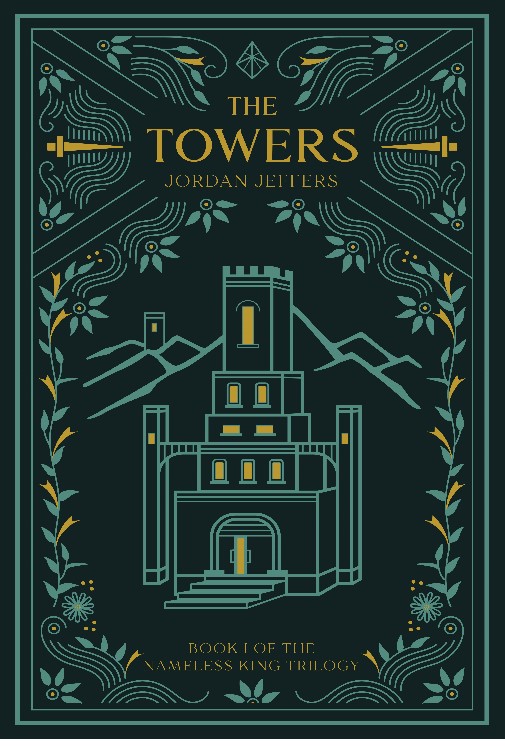
    The Towers

    The Nameless King Trilogy - Book One

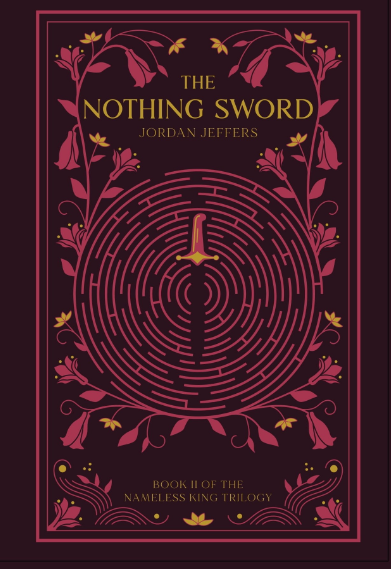
    The Nothing Sword

    The Nameless King Trilogy - Book Two

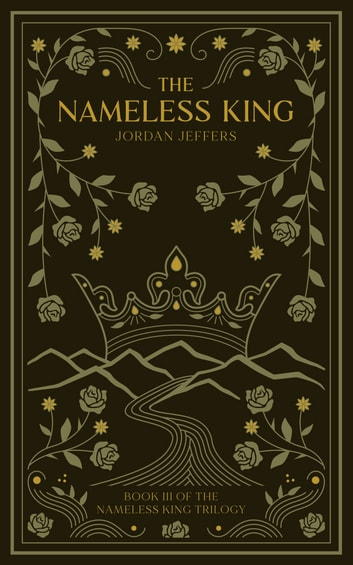
    The Nameless King

    The Nameless King Trilogy - Book Three

    Author

    Jordan Jeffers lives in Normal, Illinois with his family. Contact him using one of the electronic relationship buttons below.

    Newsletter Signup

    Archives

    August 2022
    July 2022
    March 2016
    January 2016
    December 2015
    February 2015
    October 2014
    September 2014
    June 2014
    May 2014
    April 2014
    March 2014
    February 2014
    January 2014
    December 2013
    November 2013
    October 2013
    September 2013
    August 2013
    July 2013
    June 2013
    May 2013
    April 2013
    March 2013
    February 2013

    Categories

    All
    Books
    Fantasy
    Interviews
    Movies
    Music
    Nerd Stuff
    Personal
    Promotional
    Religion
    Sci Fi
    Sports
    Writing


Powered by Create your own unique website with customizable templates.